Location
A Pristine North Atlantic Environment – Perfect for Salmon
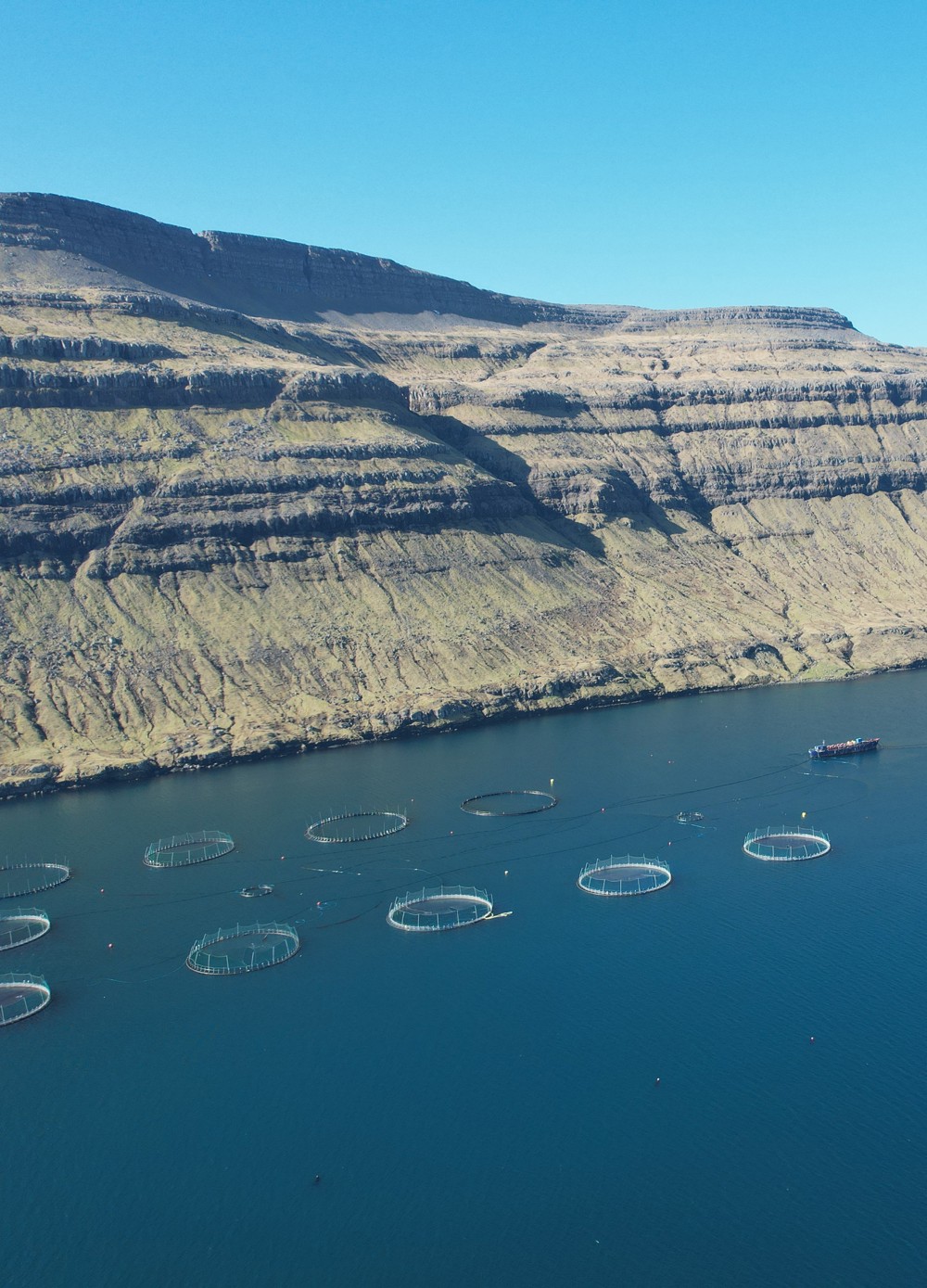
Situated in the middle of the North Atlantic, the Faroe Islands are surrounded by some of the cleanest and most unspoiled seawater in the world. Thanks to the islands' remote location, far from heavy industry and pollution, the ocean here is uniquely pure. Continuous strong tidal currents sweep through the fjords and sounds, bringing in fresh, oxygen-rich seawater that flows naturally through salmon pens. This not only ensures optimal conditions for the health and welfare of the fish, but also helps preserve the marine environment, as the fast-moving currents prevent waste buildup and allow for effective natural cleaning of farming areas.
The surrounding sea is cold, stable, and full of nutrients, with temperatures averaging 8.0–8.5°C throughout the year and minimal seasonal variation. These conditions are essential for salmon to grow slowly and naturally, resulting in firm texture and excellent taste. It’s no coincidence that wild salmon from across northern Europe choose to feed in the waters north of the Faroe Islands—nature itself confirms the quality of these seas.
Cold, Stable Water Temperatures Year-Round
One of the most critical factors in salmon farming is water temperature. The Faroe Islands benefit from a unique oceanic mixing zone, where cold Arctic waters meet the warmer North Atlantic Drift (an offshoot of the Gulf Stream). This combination results in cool, stable sea temperatures year-round, typically between 8.0 and 8.5°C.
This temperature range is ideal for Atlantic salmon, promoting slow, healthy growth and strong immune systems. The lack of large seasonal fluctuations reduces stress on the fish and supports consistent production quality.
In fact, these waters are so well suited to salmon that wild salmon from across the North Atlantic migrate to feed in Faroese waters - a natural sign of the richness and suitability of the ecosystem.
Powerful Currents and Self-Cleaning Fjords
The Faroese coastline is defined by deep fjords and narrow sounds, carved out by Ice Age glaciers. These natural formations offer both shelter from rough weather and excellent hydrodynamic conditions. Strong tidal currents continuously flush seawater in and out of these fjords, ensuring a constant supply of oxygen-rich, fresh seawater. This continuous water exchange naturally removes waste and keeps the environment inside and around the pens clean. These self-cleaning systems reduce the environmental footprint of aquaculture and contribute to sustainable farming practices. The predictable movement of the currents also supports good site management and allows each farming location to maintain high water quality and fish welfare standards.
